
Naomi Osaka-Inspired Japanese-Haitian Fridge Meals: Easy Onigiri and Rice Bowls You Can Make Tonight
Jul 31, 2026
# Naomi Osaka-Inspired Japanese-Haitian Fridge Meals: Easy Onigiri and Rice Bowls You Can Make Tonight
Naomi Osaka is one of the most electrifying athletes of her generation — and her cultural identity is just as dynamic as her game. Born to a Japanese mother and a Haitian father, raised between Japan and the United States, Naomi carries two deeply rich food cultures within her. Japanese cuisine is renowned for its precision, umami depth, and beautiful simplicity. Haitian cuisine is bold, aromatic, herb-forward, and deeply soulful. Separately, they're magnificent. Together? They're extraordinary.
This recipe post is a love letter to that duality. We're making two dishes tonight — classic onigiri (Japanese rice balls) with a Haitian-spiced twist, and a fusion rice bowl that layers the best of both worlds into one satisfying, nourishing meal. The best part? These are true fridge meals, meaning they're designed to be made from whatever you've got on hand. Got leftover rice? Chicken? A lime? Some soy sauce and a hot pepper? You're already halfway there.
Whether you're a longtime fan of Japanese cooking, a devotee of Haitian flavors, or simply a busy person who wants something delicious on the table tonight, this recipe is for you. No special equipment needed. No hard-to-find ingredients. Just good food, inspired by a remarkable woman who reminds us that blending worlds — in tennis and in the kitchen — always produces something worth celebrating.
---
Ingredients
For the Onigiri (Makes 6–8 rice balls)
- 3 cups short-grain Japanese white rice (or sushi rice) — Do not substitute long-grain here; the starch is what makes the rice hold its shape. In a pinch, medium-grain works.
- 3 ¼ cups water (for cooking the rice)
- 1 ½ teaspoons salt, divided
- 1 tablespoon rice vinegar (optional, but adds a subtle brightness)
- 1 teaspoon sesame oil
- 1 can (5 oz) tuna in water, drained — Canned salmon or shredded rotisserie chicken also work beautifully.
- 1 tablespoon mayonnaise (Kewpie mayo is ideal if you have it)
- 1 teaspoon Scotch bonnet hot sauce (or any habanero-based hot sauce) — Use less if you're sensitive to heat, or substitute sriracha for a milder version.
- 1 teaspoon soy sauce
- ½ teaspoon lime juice
- 1 green onion, finely sliced
- 1 tablespoon fresh parsley or cilantro, minced — In Haitian cooking, parsley is ubiquitous; use it if you can.
- Pinch of garlic powder
- 4–6 sheets nori (dried seaweed), cut into strips or halves
- Sesame seeds, for sprinkling
- Flaky sea salt, to finish
For the Japanese-Haitian Rice Bowl (Serves 2)
- 2 cups cooked rice (leftover rice works perfectly here)
- 1 cup shredded cooked chicken — Rotisserie chicken is a weeknight hero. Leftover grilled fish or tofu also work.
- 2 tablespoons soy sauce
- 1 tablespoon Haitian epis (blended green seasoning base — see Tips section) — Substitute with 1 tsp each of minced garlic, parsley, and a splash of lime if you don't have epis on hand.
- 1 teaspoon sesame oil
- 1 teaspoon honey or agave
- 1 tablespoon neutral oil (vegetable or avocado oil)
- ½ cup shredded cabbage or slaw mix
- 1 carrot, julienned or shredded
- 1 avocado, sliced
- 1 soft or hard-boiled egg per bowl (optional but highly recommended)
- Lime wedge, fresh scallions, sesame seeds, to garnish
- Pickled jalapeños or pickled daikon, if available
Instructions
Part 1: Make the Onigiri
- Rinse and cook the rice. Rinse your short-grain rice under cold water, swirling with your hand until the water runs mostly clear — this removes excess starch and keeps the grains from getting gluey. Cook according to your rice cooker or stovetop method. For stovetop: combine rinsed rice and water in a medium saucepan, bring to a boil, then reduce to the lowest heat, cover tightly, and cook for 15 minutes. Remove from heat and let steam, lid on, for another 10 minutes.
- Season the rice. Transfer the hot rice to a wide bowl. Drizzle with rice vinegar and sesame oil, then sprinkle with 1 teaspoon of salt. Use a rice paddle or wide spatula to gently fold — not stir — the seasoning in, fanning the rice as you go to help it cool slightly. The rice should look glossy and smell nutty and clean.
- Make the Haitian-spiced tuna filling. In a small bowl, combine drained tuna, mayo, hot sauce, soy sauce, lime juice, green onion, parsley, and garlic powder. Mix until creamy and well-combined. Taste it — it should be savory, a little spicy, a little bright. Adjust with more hot sauce or lime to your preference.
- Shape the onigiri. Wet your hands with cold water and sprinkle a little salt on your palms — this prevents sticking and seasons the outside of the rice. Scoop about ½ cup of rice into your palm and flatten it slightly. Place a heaping teaspoon of the tuna filling in the center, then fold the rice up and around the filling, pressing firmly to encase it. Shape into a triangle by cupping the rice in one hand and pressing with the other — think of it like making a sandwich with your palms. Press firmly but not crushingly; you want the rice to hold together without becoming dense.
- Wrap and finish. Wrap each onigiri with a strip of nori around the base (or halfway up the rice ball). Sprinkle with sesame seeds and a pinch of flaky sea salt. Serve immediately while the rice is still warm, or let cool to room temperature if packing for later.
Part 2: Make the Fusion Rice Bowls
- Make the sauce. In a small bowl or jar, whisk together soy sauce, epis (or your substitute), sesame oil, and honey until smooth. This is your dressing and marinade — taste it. It should be savory, slightly sweet, fragrant, and have that deeply herbaceous green flavor that Haitian epis is known for.
- Warm the chicken. Heat a skillet over medium-high heat and add your neutral oil. When the oil shimmers, add the shredded chicken and half of your sauce. Toss to coat and cook for 2–3 minutes, until the chicken is heated through and starting to caramelize slightly at the edges — you want a few crispy bits, golden and fragrant.
- Warm the rice. If using leftover cold rice, add it to the same pan after removing the chicken, add a splash of water, and stir-fry for 2–3 minutes until heated through and slightly toasted. Season with a pinch of salt.
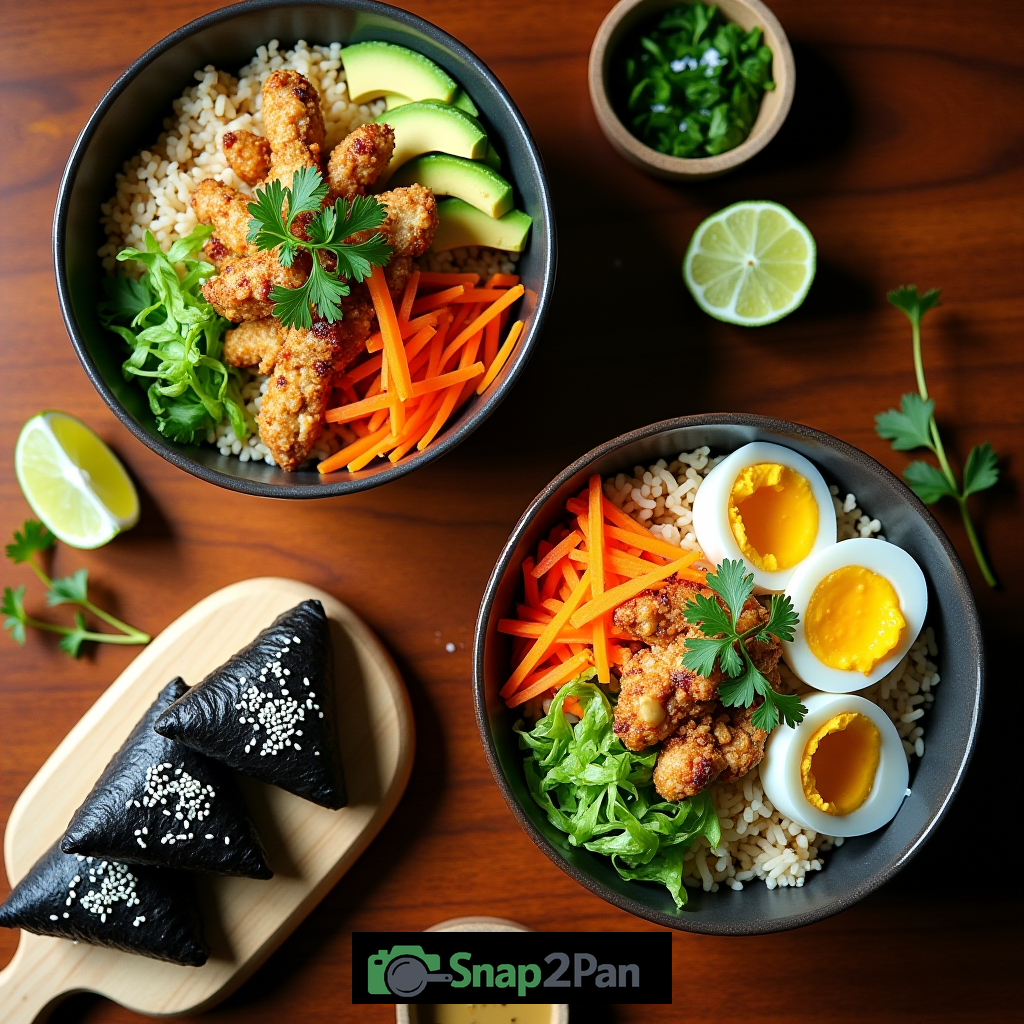
- Assemble the bowls. Divide the warm rice between two bowls. Arrange the glazed chicken on top. Add shredded cabbage, julienned carrot, and sliced avocado in sections around the bowl. Halve your soft-boiled egg and nestle it alongside the toppings.
- Drizzle and garnish. Spoon the remaining sauce over the bowl. Add pickled jalapeños or daikon if using, then finish with sliced scallions, a sprinkle of sesame seeds, and a squeeze of fresh lime. The bowl should be vibrant with color — green from the scallions and avocado, orange from the carrots, golden from the chicken — and the aroma should hit you with that beautiful combination of sesame, lime, and herby epis.
Tips & Variations
1. Make your own quick epis. Haitian epis is a blended seasoning base made from green bell pepper, parsley, scallions, garlic, thyme, and lime juice. Blend a rough batch in a food processor or blender, pour it into an ice cube tray, and freeze for easy weeknight use. It keeps for 3 months frozen and transforms any rice dish, marinade, or soup.
2. Swap the protein freely. Both the onigiri filling and the rice bowl work beautifully with canned sardines (very Haitian), smoked salmon (very Japanese), crispy tofu, or even just a perfectly fried egg. This is a fridge meal philosophy — use what you have.
3. Try a Griot-Inspired Variation. Haitian griot is fried marinated pork — one of the most beloved dishes in the cuisine. For a griot-inspired rice bowl, marinate small cubes of pork shoulder in epis, citrus juice, and scotch bonnet overnight, then pan-fry until crispy and golden. Serve over the same rice bowl base for a truly special weekend version.
4. Make it vegetarian. Skip the tuna and chicken entirely. For the onigiri filling, mash seasoned black beans with a little lime and scotch bonnet for a Haitian-inspired twist, or use pickled daikon and sesame. For the rice bowl, pan-fry cubed firm tofu in the soy-epis sauce until caramelized.
5. Meal prep both dishes. Both components scale up beautifully. Make a large batch of seasoned rice, a double portion of filling, and a jar of the soy-epis sauce at the start of the week. Onigiri can be assembled daily in minutes, and the rice bowl comes together in under 10 minutes when the components are prepped.
---
Storage & Reheating
Onigiri are best enjoyed the day they're made, ideally within a few hours of shaping. If you need to store them, wrap each one tightly in plastic wrap and refrigerate for up to 24 hours. The rice will firm up in the fridge — to refresh, microwave (still wrapped) for 30–45 seconds until just warmed through. Re-wrap with fresh nori before eating, as stored nori gets chewy.
Rice bowls store beautifully with just a little strategy. Keep the rice, chicken, and sauce in separate airtight containers in the fridge for up to 3 days. Store the avocado and soft-boiled egg separately (the egg can be refrigerated unpeeled for up to 5 days). Reheat the rice and chicken in a skillet with a splash of water, assemble the bowl fresh with the cold toppings, and you've got a genuinely great meal in 5 minutes.
The soy-epis sauce keeps in a sealed jar in the fridge for up to a week. It doubles as a stir-fry sauce, salad dressing, or marinade for grilled proteins.
---
Nutrition Notes
These dishes are naturally well-balanced and nourishing. The short-grain rice provides sustained, complex carbohydrate energy — ideal for active days (or watching a Grand Slam match). The tuna or chicken filling delivers a good hit of lean protein, while the avocado brings heart-healthy fats and a creamy richness that makes the bowl feel genuinely satisfying.
Haitian epis is loaded with fresh herbs, garlic, and citrus, which means it's doing double duty as a flavor powerhouse and a nutritional one. Parsley in particular is rich in vitamins C and K, and garlic has well-documented anti-inflammatory properties.
Nori is a surprising source of iodine and trace minerals, making those little seaweed strips more than just aesthetics. And the sesame seeds? A tiny but mighty source of calcium and healthy fats.
These are everyday meals that leave you feeling energized rather than heavy — exactly what you'd want to fuel a champion's lifestyle.
---
FAQ
Q: I've never made onigiri before. Is it hard to shape them? A: It takes one or two tries to get the feel for it, but it genuinely is not difficult. The most important things are: use short-grain rice (it sticks to itself), keep your hands wet and lightly salted, and press firmly when shaping. Don't be precious about it — irregular, rustic onigiri taste exactly as good as perfect triangles. Watch one quick tutorial video if it helps, but honestly, just dig in. By your third one, you'll be shaping them confidently.
Q: Where do I find Haitian epis or Scotch bonnet hot sauce? A: Caribbean grocery stores are your best bet for both, and they're increasingly available in larger supermarkets in the international foods aisle. Online retailers carry a wide range of Caribbean hot sauces. If you truly can't find Scotch bonnet sauce, any habanero-based hot sauce (like Melinda's or a grocery store brand) is a close substitute — the fruity heat is similar. For epis, the quick homemade version in the Tips section is genuinely just as good as store-bought and takes 5 minutes in a blender.
Q: Can I use leftover rice for the onigiri? A: You can, but with a caveat. Leftover refrigerated rice firms up and loses some of its natural stickiness, which makes it harder to shape and more likely to fall apart. If you want to use leftover rice for onigiri, warm it first with a splash of water to soften, then re-season with a bit of salt and sesame oil. Pack it very firmly. It's doable, but freshly cooked rice gives far better results for the rice balls. For the rice bowls, however, leftover rice is absolutely perfect.
Q: My family doesn't like spicy food. Can I still make these? A: Absolutely. The heat in both recipes is completely adjustable. Simply omit the Scotch bonnet hot sauce from the tuna filling and replace it with a teaspoon of Dijon mustard or a tiny splash of apple cider vinegar for acidity without heat. For the rice bowl sauce, leave out the scotch bonnet element and add a little extra honey for balance. The epis itself is not spicy — it's herbaceous and savory. Both dishes are deeply flavorful without any heat at all.